Trane XR-Series Air Conditioners in Alhambra
The quick read: Alhambra Trane HVAC services Trane XR-series air conditioners across Alhambra, CA and the 91801 ZIP, the single-stage XR13 through XR17 Climatuff value units. Call (213) 566-7218 or book online for XR repair or replacement; a capacitor or contactor fix runs $150 to $450, and a full XR condenser-and-coil replacement runs $5,000 to $12,000.
Quick numbers
- Models served: XR13, XR14, XR15, XR16, XR16 Low Profile, XR17 (often 4TTR strings).
- Type: single-stage Climatuff compressor, all-aluminum Spine Fin coil, non-communicating.
- Capacitor or contactor repair: typical $150-$450.
- Refrigerant leak and recharge $225-$1,500; condenser fan motor $300-$700.
- Full XR replacement (condenser + coil): $5,000-$12,000.
- Service area: Alhambra, Alhambra Vista, Bean Tract, Midwick (91801, 91803).
- Independent; in-warranty parts referred to the installing dealer first.
What is the Trane XR series?
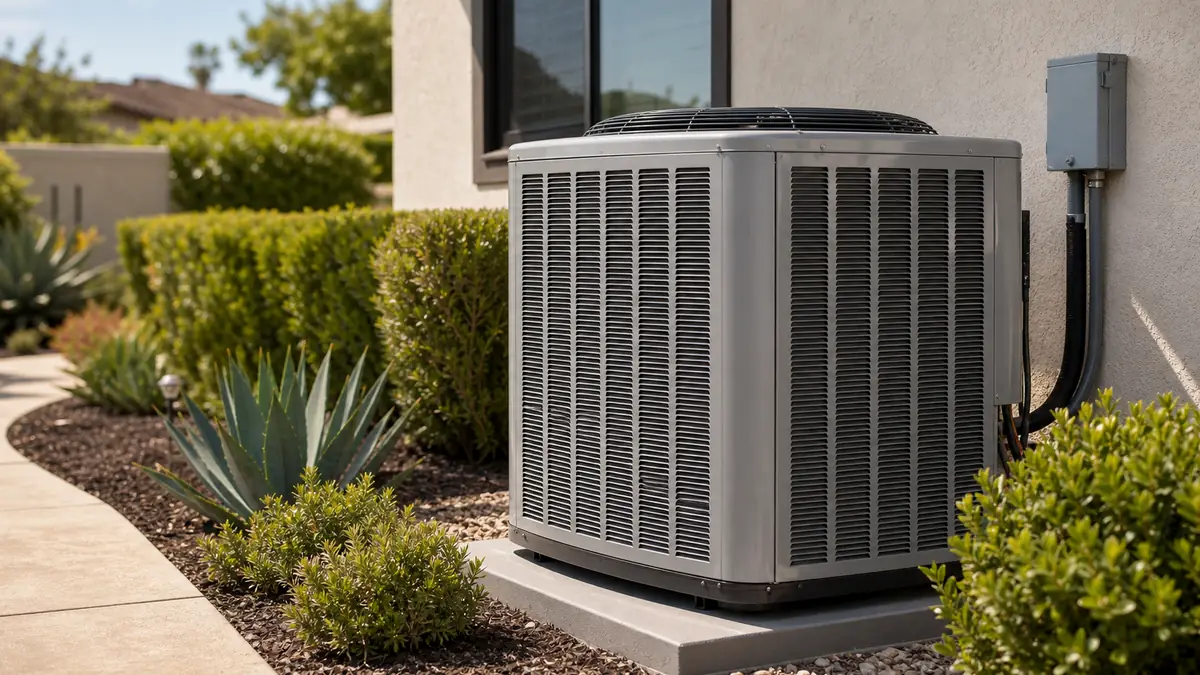
The XR line is Trane's single-stage value tier, the durable, widely stocked workhorse behind most Alhambra AC replacements of the last decade and a half. It pairs the Climatuff scroll compressor with the all-aluminum Spine Fin outdoor coil, which resists the corrosion that plagues copper fin-tube coils and offers fewer joints to leak. The XR runs full-on or off rather than modulating, so it is simple, reliable, and inexpensive to repair, a sensible match for a modest 1950s slab home or a right-sized retrofit.
| Symptom | Likely cause / component | Cost lane |
|---|---|---|
| Hums, fan and compressor will not start | Dual-run capacitor | $150-$450 |
| Outdoor unit dead, no pull-in | Contactor | $150-$450 |
| Compressor runs, fan does not spin | Condenser fan motor | $300-$700 |
| Iced coil, weak cooling | Low refrigerant leak or dirty Spine Fin coil | $225-$1,500 |
| Cools then quits, repeated | Failing compressor (weigh replacement) | $1,200-$3,500 |
Which XR model do I have, and what does it fit?
The XR line spans a range of single-stage condensers, and the number roughly tracks the old SEER rating. The model is on the condenser data plate; many also carry a 4TTR string. Here is how the family sorts for an Alhambra home:
- XR13 / XR14. The oldest value units still common on 1990s-2000s replacements. Durable, single-stage, but below today's SEER2 floor, so when one needs a compressor it is usually replacement time.
- XR15 / XR16. The middle of the line and the most common XR we see on Alhambra slabs. The XR16 Low Profile variant is useful where a tall condenser would crowd a narrow side yard, which is frequent on the tight lots in Bean Tract and Mayfair.
- XR17. The top single-stage XR, the most efficient of the family, a sensible match when a homeowner wants value but a higher SEER2 than the older units delivered.
All of them pair the Climatuff scroll compressor with the all-aluminum Spine Fin coil and run full-on or off. None modulate, so they take a simple Wi-Fi or programmable thermostat rather than a communicating ComfortLink II control. For a modest, well-shaded 1,400 sq ft Emery Park bungalow that does not need variable-speed precision, a right-sized XR16 is often the most sensible system in the catalog.
Why does the XR capacitor fail first here?
The dual-run capacitor stores the jolt that starts the Climatuff compressor and condenser fan. Alhambra's Zone 9 heat, with its long string of 90 F-plus days and a heat-island bump east of downtown LA, bakes that capacitor until its capacitance drops below spec. The unit then hums but cannot start, often on the hottest afternoon. It is a cheap, stocked part and usually a single-visit fix; the key is to also confirm the contactor and the compressor's amp draw were not damaged when the cap failed.
How long should an XR last in Alhambra?
A well-maintained XR commonly runs 12 to 18 years, but our heat load and the dust from dense streets shorten that without coil cleaning and charge checks. The honest rule: under roughly 10 years, repair it, because an XR rarely needs more than a capacitor, contactor, or fan motor. Past 12 years, a compressor or a recurring leak repair starts approaching the cost of a current-efficiency replacement, and that is the moment to read the repair-or-replace guide.
Installing or replacing an XR in an old Alhambra home
Most XR replacements here are condenser-and-coil changeouts on homes that already have a central system, but the city's housing stock adds wrinkles. Tight side yards on 1920s lots in Mayfair and Bean Tract can force the XR16 Low Profile or careful placement to keep the required clearance around the Spine Fin coil for airflow and service access. Older 1950s and 1960s retrofit ducts often run undersized, so we measure static pressure before sizing; a new XR pushing against a kinked return will trip its high-limit and short-cycle no matter how good the condenser is. Title-24 Zone 9 calls for refrigerant-charge and airflow verification on a replacement split system, and HERS duct-sealing verification once the ducts are altered, so we pull the permit and book the rater as part of the job.
XR single-stage versus XV variable-speed: which fits?
This is the real decision when an XR finally quits. The honest trade-off is comfort and efficiency against cost and simplicity, not one being better.
| Factor | XR single-stage | XV18 / XV20i variable-speed |
|---|---|---|
| Operation | Full-on or off | Modulates with the Climatuff inverter |
| Comfort | Temperature swings, audible cycling | Steady temperature, quiet, better dehumidification |
| Thermostat | Standard Wi-Fi or programmable | Requires communicating XL824 or XL850 |
| Repair cost | Lower; simple stocked parts | Higher; inverter and communicating boards |
| Best for | Modest, well-shaded homes on a budget | Open 1920s plans wanting even comfort |
Should I upgrade an XR to a variable-speed XV?
If your XR is healthy, there is no reason to rush. When it is time to replace, the variable-speed XV18 or XV20i with the Climatuff inverter delivers quieter operation and tighter temperature control, especially valuable in an open 1920s floor plan where a single-stage unit can feel like blasts of cold followed by silence. The XV needs a communicating XL824 or XL850 thermostat; the XR does not. We lay out the cost and comfort trade-offs on the ComfortLink controls page and during a free sizing visit.
Common questions
How do I know if I have a Trane XR air conditioner?
Check the model number on the condenser's data plate. XR units carry names like XR13, XR14, XR15, XR16, or XR17, and the model string often starts with 4TTR. The XR line is Trane's single-stage value tier, common on Alhambra replacements done over the last 15 years.
Why do XR units fail in Alhambra heat?
The XR is durable, but the dual-run capacitor that starts its Climatuff compressor is the part our Zone 9 heat punishes first. After 40 to 60 days a year above 90 F, the electrolyte degrades and the unit hums without starting. Contactors are the next most common XR failure.
Is an XR worth repairing, or should I upgrade?
Below roughly 10 years, an XR nearly always earns a capacitor, contactor, or fan-motor repair, since those parts are inexpensive and kept in stock. Once it is past 12 years, a compressor or major leak repair begins to rival the price of a new system, which is the point to weigh it against a current SEER2 unit.
Can I add a smart thermostat to an XR?
Yes, within limits. The XR is single-stage and non-communicating, so it works with a standard Wi-Fi thermostat but cannot use the communicating ComfortLink II staging that XV systems unlock. A simple smart thermostat gives you scheduling and remote control without overcomplicating a single-stage unit.
Does the all-aluminum Spine Fin coil really leak less?
It tends to. The Spine Fin design is a single aluminum tube wrapped in aluminum fins, so it resists the galvanic corrosion that pits copper-and-aluminum fin-tube coils, and it has fewer brazed joints to fail. Leaks still happen, usually at the service valves or a braze point, so when an XR ices up we leak-search and repair rather than just adding R-410A.
My XR is 9 years old and needs a fan motor. Repair or replace?
At 9 years a condenser fan motor is a clear repair, $300 to $700, because the rest of the unit has years left and that part has nothing to do with the compressor. The replace conversation only opens past roughly 12 years or when the failed part is the Climatuff compressor itself at $1,200 to $3,500, where the repair starts rivaling a new SEER2 system.
Related: AC repair, AC installation, Trane heat pumps, and Trane fault codes.